Project overview
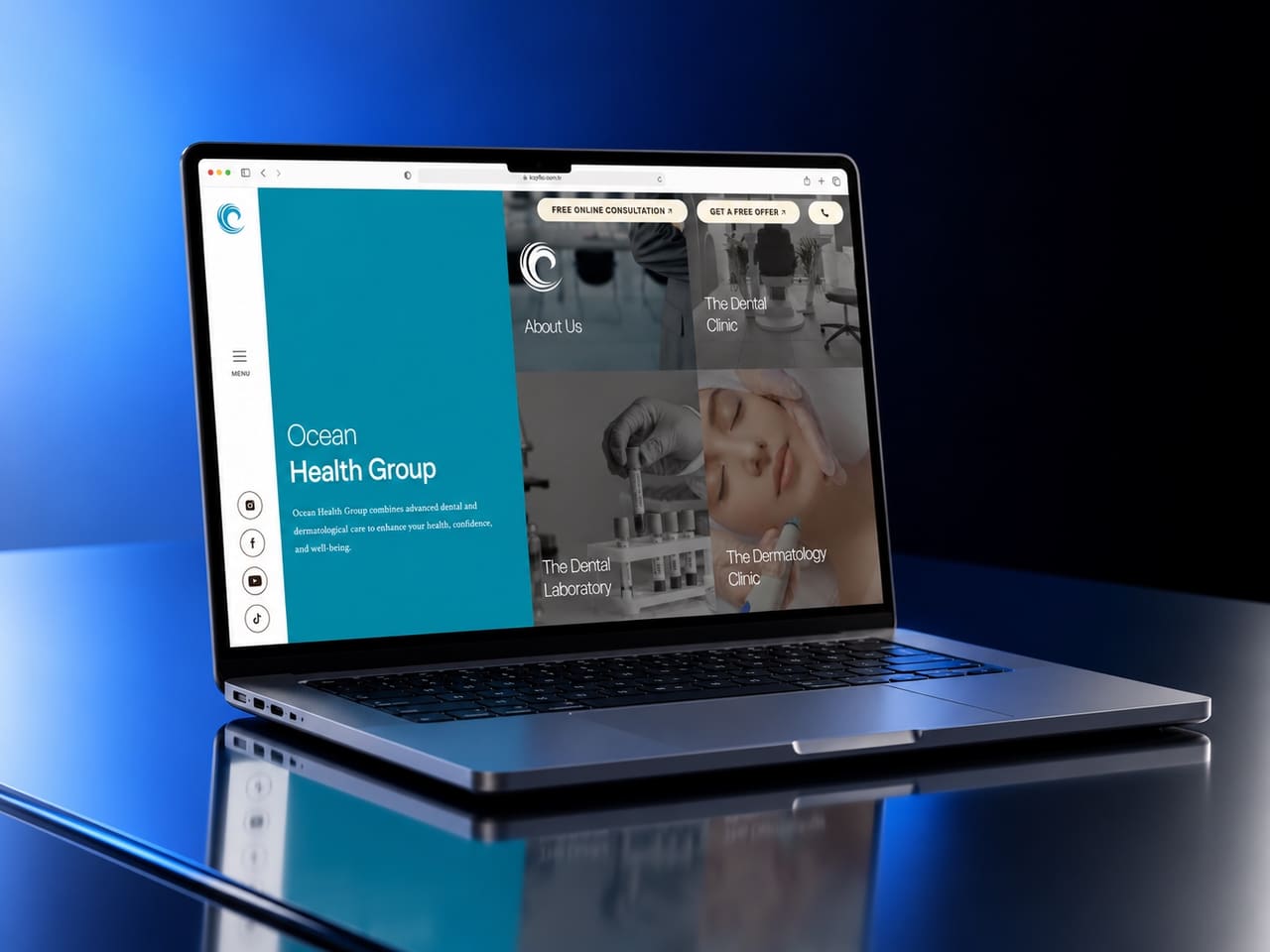
The first job of any digital platform in healthcare is to inspire trust. Our goal for OceanHealth was to create a web experience that presents healthcare services and related information in a calm, clear way without overwhelming visitors.
What we built
- Service pages: a content structure that explains each service with clear headings and plain descriptions.
- Informative content: an orderly information architecture that gets visitors to what they need quickly.
- Responsive design: a consistent, legible interface on every screen from desktop to mobile.
- Contact and enquiry form: a form where visitors describe their need in a few fields and reach the right team directly.
- Content management: pages, images and copy can be updated from a panel without technical knowledge.
- SEO and performance: a search-friendly page structure, fast loading and optimised images.
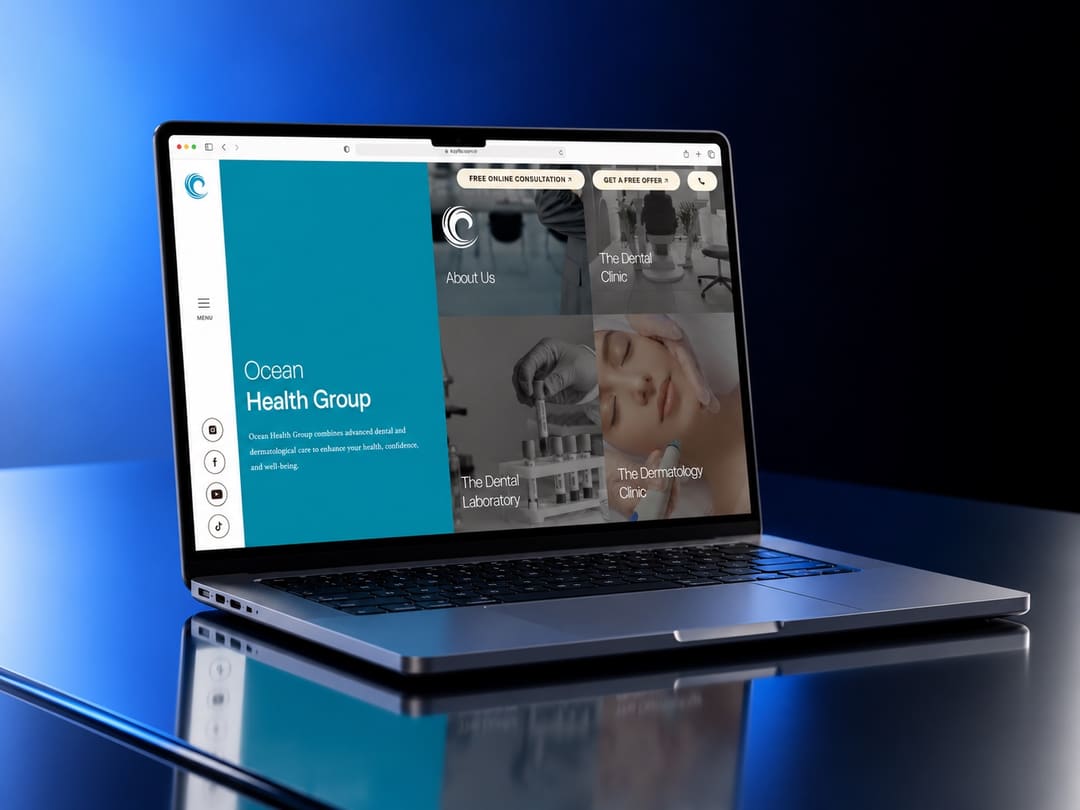
Taking a cue from the name, we built a colour palette on the fresh, calm tones of the ocean. Generous white space, readable typography and clear calls to action guide visitors to the right content without distraction.
How we worked
For OceanHealth we first mapped the content structure and page hierarchy. We designed in Figma, starting from the home page and extending to every page template. We turned the approved design into code component by component, entered the content, and launched after testing across screen sizes and browsers.
Technical foundation
We built the site with React and Next.js; TypeScript keeps the code reliable and Tailwind CSS keeps the interface consistent. Content is updated from an admin panel running on Node.js and MySQL. Because pages are rendered on the server, the site loads fast and is indexed correctly by search engines.
Outcome
OceanHealth became a web platform that presents healthcare services through a reassuring, airy digital experience that is comfortable to use on any device.
Technologies used
- React
- Next.js
- TypeScript
- Tailwind CSS
- Node.js
- MySQL
- Figma